

NACS vs J1772: What the 2026 LEAF’s two charge ports actually mean for you
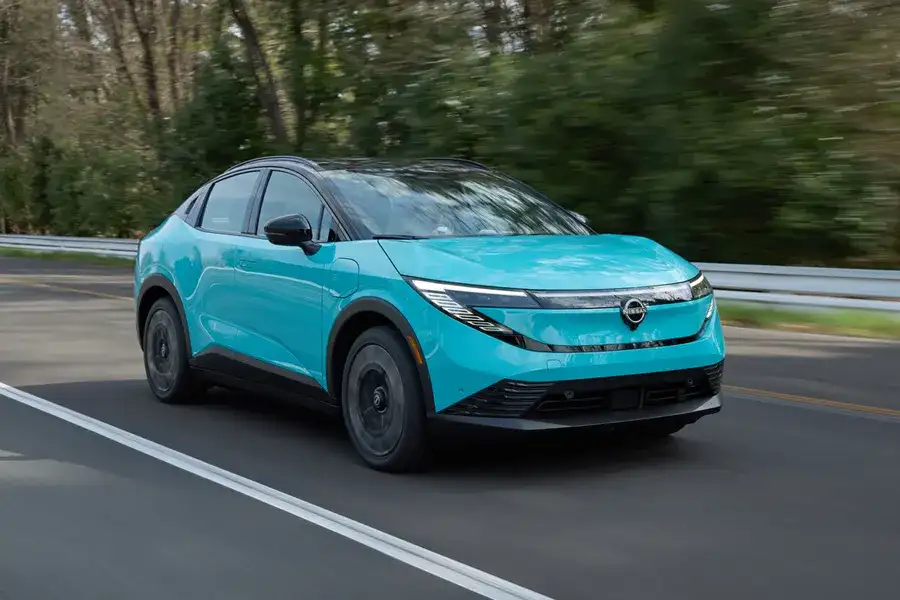
If you’ve heard the 2026 Nissan LEAF has two charge ports and thought, “Wait… do I need adapters now?”—you’re not alone.
Here’s the simple way to think about it: the 2026 LEAF separates everyday charging from road-trip fast charging into two different ports.
Important detail: the LEAF’s NACS port is for DC fast charging only—your Level 1 / Level 2 (AC) charging happens through the J1772 port.²
The quick answer: which port is for what?
- J1772 (AC charging / Level 1 & Level 2): your everyday charging port for home and most public “park and charge” stations.
- NACS (DC fast charging / Level 3): your fast-charge port for compatible Tesla Superchargers and other NACS DC fast chargers.¹
Why Nissan did this (and why it feels confusing at first)
Most EVs use one port that handles both:
- AC charging (overnight/home)
- DC fast charging (quick stops)
The 2026 LEAF uses two separate ports instead:
- J1772 = AC only
- NACS = DC only²
That design makes the “which plug goes where?” question more important—especially when you pull into a lot and see a connector that physically fits, but won’t work for the type of power it’s delivering.
“Do I need an adapter?” Use this real-world cheat sheet
1) Charging at home
Usually: no adapter needed.
Most home setups (Level 1 or Level 2) use J1772, so you’ll plug into the J1772 port and you’re set. Nissan also notes Level 1 and Level 2 charging can be done using a Nissan portable charging cable.¹
2) Public Level 2 charging (“destination” charging)
Usually: no adapter needed.
Most public Level 2 stations are J1772 → use your J1772 port.
But what about Tesla Level 2 (“Destination”) chargers?
Some hotels/garages use a Tesla-style NACS handle for Level 2 AC charging. Because the LEAF’s NACS port is DC-only, you don’t use that port for Level 2. Instead, you’d use a NACS-to-J1772 adapter and plug into the J1772 port.²
3) Tesla Superchargers (fast charging on trips)
Often: no adapter needed (when the Supercharger is compatible).
The LEAF’s NACS DC port is designed to access compatible Tesla Superchargers, and Nissan points owners to the MyNISSAN app / NISSAN ENERGY Charge Network to locate compatible sites and handle payment.¹
4) CCS DC fast chargers (Electrify America, EVgo, etc.)
This is the main “maybe.”
Many non-Tesla fast chargers use CCS. If you want access to those stations, you’ll typically need a CCS-to-NACS DC adapter—and Nissan sells an OEM CCS Adapter described as converting CCS to NACS for charging the LEAF at compatible CCS stations.³
A simple table you can screenshot
| Where you’re charging | What you’ll usually see | Use your LEAF’s… | Adapter likely? |
| Home (Level 1 / Level 2) | J1772 (AC) | J1772 port | No |
| Public Level 2 | J1772 (AC) | J1772 port | No |
| Tesla “Destination” Level 2 | NACS (AC) | J1772 port | Yes: NACS → J1772² |
| Tesla Supercharger (DC) | NACS (DC) | NACS port | Often no¹ |
| Non-Tesla DC fast charger with NACS handle | NACS (DC) | NACS port | No (if compatible) |
| CCS DC fast charging | CCS (DC) | NACS port | Yes: CCS → NACS³ |
Home charging vs on-the-go charging checklist
If your plan is mostly home charging
You’re in the simplest, lowest-stress routine.
- You can plug in overnight (Level 1 or Level 2) using the J1772 port
- Your driving is mostly commuting, errands, school runs, and daily life around the area
- You’ll only use public chargers occasionally
- You want the “plug in and forget it” experience
Nice-to-have:
- A Level 2 home setup if you want faster overnight charging¹
If you’ll road-trip or fast-charge frequently
Plan for flexibility so you’re never stuck hunting for “the right plug.”
- You expect to DC fast charge on longer trips
- You like the idea of using compatible Tesla Superchargers via the NACS DC port¹
- You sometimes rely on CCS fast chargers
Smart to keep in the car:
- CCS → NACS DC adapter (for CCS fast-charging access)³
- NACS → J1772 adapter (for Tesla Level 2 “Destination” charging)²
What this means in plain English
- Daily life: You’ll charge like most EV owners—home + Level 2—through J1772.
- Road trips: You’ll fast charge through the NACS DC port, including compatible Tesla Superchargers.¹
- Adapters: You may want one or two adapters depending on where you charge most often—especially if you use CCS fast chargers or Tesla Level 2 Destination chargers.²³
Want help matching the LEAF to your charging routine?
At Nucar Nissan of Keene (544 Monadnock Hwy, Swanzey, NH 03446), we’re happy to help you map out:
- what home charging looks like for your driveway/garage setup,
- and which adapter(s) are actually worth buying for your driving habits.
Everyone loves a Nucar!
Sources
¹ Nissan USA — “Range & Charging” (mentions 2026 LEAF built-in NACS port for DC fast charging, access to Tesla Superchargers, MyNISSAN app guidance, and Level 1/Level 2 charging via portable cable): https://www.nissanusa.com/vehicles/going-electric-ev/range-charging.html.
² InsideEVs — “The 2026 Nissan Leaf Has One Weird Charging Compromise” (J1772 for slow/Level 2; NACS for fast charging only; adapters for Tesla Destination Level 2 and CCS fast charging): https://insideevs.com/news/762582/nissan-leaf-j1772-nacs-slow-charging/.
³ Official Nissan Parts Store — “CCS Adapter (T99F9-7TB0A)” (described as converting CCS to NACS to charge your LEAF at compatible CCS stations): https://parts.nissanusa.com/parts/nissan-ccs-adapter-t99f97tb0a.
0 comment(s) so far on NACS vs J1772: What the 2026 LEAF’s two charge ports actually mean for you