

Charging a Nissan EV Is Easier Than a Lot of Drivers Think
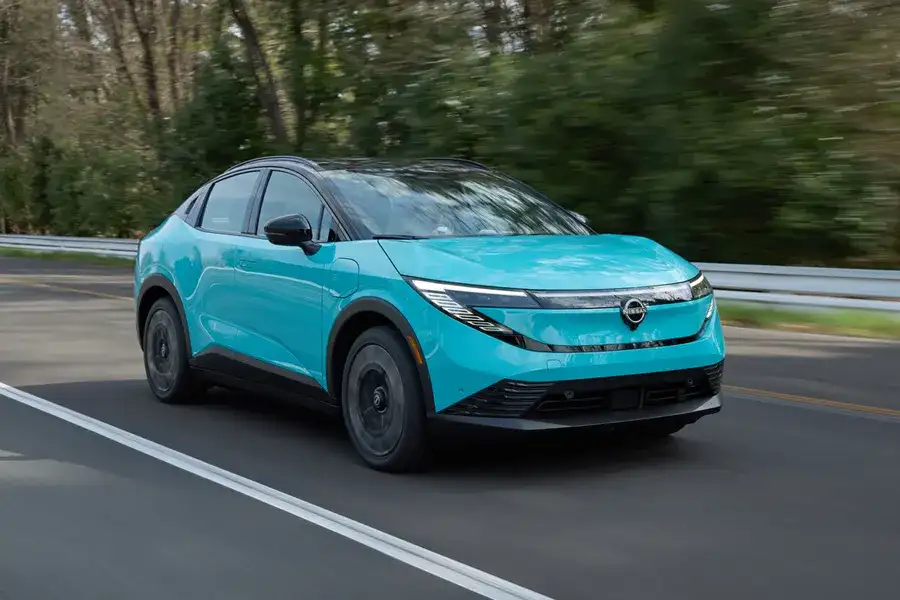
Charging a Nissan EV is simpler than many drivers expect. The biggest misconception is that EV ownership means constant charger hunting or a major lifestyle change. In real life, most EV owners do the majority of their charging at home overnight using Level 1 or Level 2 equipment.¹
That matters around Keene, Swanzey, and nearby towns, where a lot of driving follows a familiar pattern. It is the commute, the school run, errands along Winchester Street, a stop downtown on Main Street, or the drive home on Route 9 or Route 12. For many households, an EV fits that routine more naturally than people think.¹
How do most Nissan EV owners charge at home?
Home charging is the center of the EV experience for a lot of drivers. Instead of making a separate stop for fuel every week, you plug in at home and let the vehicle charge while you eat dinner, relax, or sleep.¹
Level 1 charging uses a standard 120-volt household outlet. It is the slowest option, but it can still be useful for light daily driving or occasional top-offs. Nissan says Level 1 charging typically adds about 2 to 5 miles of range per hour.²
Level 2 charging uses 240-volt power and is the setup many EV owners prefer for home use. It charges much faster than a standard outlet and makes overnight charging especially practical. Nissan says Level 2 charging can add about 10 to 25 miles of range per hour.²
For shoppers looking at the all-new 2026 Nissan LEAF, Nissan also says the vehicle includes a portable charge cable that works with either a 120-volt or 240-volt outlet, which makes routine charging more flexible from the start.⁵
What is the difference between Level 1, Level 2, and DC fast charging?
The easiest way to understand EV charging is to think of it in three layers.
Level 1 is the slowest and most basic option. It works from a standard outlet and is best for light use, overnight top-offs, or backup convenience.²
Level 2 is the everyday sweet spot for many owners. It is better suited to regular commuting and household driving because it refills battery range much faster while the vehicle is parked at home or at work.²
DC fast charging is the road-trip and quick-stop option. Nissan says public DC fast charging can charge an EV in roughly 15 to 45 minutes, but actual time varies based on the vehicle, charger type, battery state, and temperature.²
That last point matters. Fast charging is convenient, but it is not one fixed number every time. The most useful way to think about it is as a quick recharge when you are out, not the charging method most owners rely on every day.²
What app do Nissan EV drivers use for charging?
This is one place where specificity helps.
For the Nissan ARIYA and the 2026 Nissan LEAF, Nissan says the MyNISSAN app lets drivers check battery status, locate charging stations, remotely start or stop charging, and set charging schedules.³ ⁴
For the 2025 Nissan LEAF and earlier model years, Nissan uses the NissanConnect EV & Services app instead. That distinction is worth calling out because not every LEAF owner uses the same app experience.⁴
For shoppers comparing EV ownership against a gas vehicle, tools like this make a real difference. It is easier to plan around charging when your vehicle can show charge status, nearby charging locations, and charging controls from your phone.³ ⁴
Can a Nissan EV use Tesla Superchargers?
Yes, but the answer depends on the Nissan EV you are talking about.
Nissan says the 2026 LEAF has a built-in North American Charging Standard port for DC fast charging and supports Plug & Charge at compatible in-network stations. That means the process can be more seamless at supported chargers once the feature is activated.² ⁵
For the Nissan ARIYA, Nissan offers a compliant NACS adapter that expands DC fast-charging options, including access to the Tesla Supercharger network at compatible stations.⁶
Nissan also says its drivers can now access more than 25,000 Tesla Superchargers. That is one of the biggest reasons charging feels easier than it did just a few years ago.²
What about winter driving in New Hampshire?
Cold weather is part of EV ownership in this area, so it should be part of the conversation.
Like any vehicle, an EV can be affected by temperature extremes. Nissan notes that heat and cold can affect charging and battery performance, and FuelEconomy.gov advises that preheating the cabin while the vehicle is still plugged in can help extend range.² ⁷
That is especially relevant on colder mornings around southwestern New Hampshire. If you leave home with the cabin already warmed up, you are asking less of the battery once you are on the road.⁷
For shoppers looking at the all-new 2026 LEAF, Nissan also highlights battery thermal management and a hybrid heat pump system that help support charging confidence in both winter and summer conditions.² ⁵
Is public charging still a concern?
Public charging is easier than it used to be, but it still helps to be realistic.
Nissan’s charging tools make it easier to locate stations, start sessions, and manage charging from the app on compatible vehicles.³ ⁴ At the same time, Nissan also notes that public charging networks are operated by independent companies, station availability is not guaranteed, and idle fees can apply at some chargers after a session is complete.³ ²
That is not a reason to avoid an EV. It is simply part of using the right tool for the right job. For many drivers, home charging covers the everyday routine, while public charging supports longer drives and occasional quick top-offs.¹ ²
The real takeaway
Charging a Nissan EV is not hard to understand once it is tied to everyday driving. Home charging handles the regular routine. Level 2 makes overnight charging easy for many households. DC fast charging supports longer drives. Nissan’s app tools, expanding public charging access, and newer charging hardware make the experience more straightforward than a lot of people expect.¹ ² ³ ⁴
If your daily driving is mostly local travel around Keene, Swanzey, and the surrounding area, a Nissan EV may fit your routine more easily than you think. Explore new Nissan EV inventory, or value your trade and talk with the team at Nucar Nissan of Keene about charging, range, and which EV fits your needs. If you are shopping for an eligible new non-lease vehicle, ask about the 20/200 Protection Plan By Nucar. Everyone Loves A Nucar!
Sources
¹ https://afdc.energy.gov/fuels/electricity-charging-home
² https://www.nissanusa.com/vehicles/going-electric-ev/range-charging.html
³ https://www.nissanusa.com/owners/connect/features-apps/ev-charging.html
⁴ https://www.nissanusa.com/owners/connect/features-apps/ev-remote-services.html
⁵ https://www.nissanusa.com/vehicles/electric-cars/leaf/features.html
⁶ https://parts.nissanusa.com/parts/nissan-nacs-adapter-t99f95mp1b
⁷ https://www.fueleconomy.gov/feg/coldweather.shtml
0 comment(s) so far on Charging a Nissan EV Is Easier Than a Lot of Drivers Think